ServicesWhole-Home Filtration
Whole-Home Filtration in Stafford
We install filtration where water enters your home, so every faucet, shower and appliance gets cleaner-tasting water. Before you choose, we lay out what each system costs to buy, how long its media lasts and what it asks of you each year.
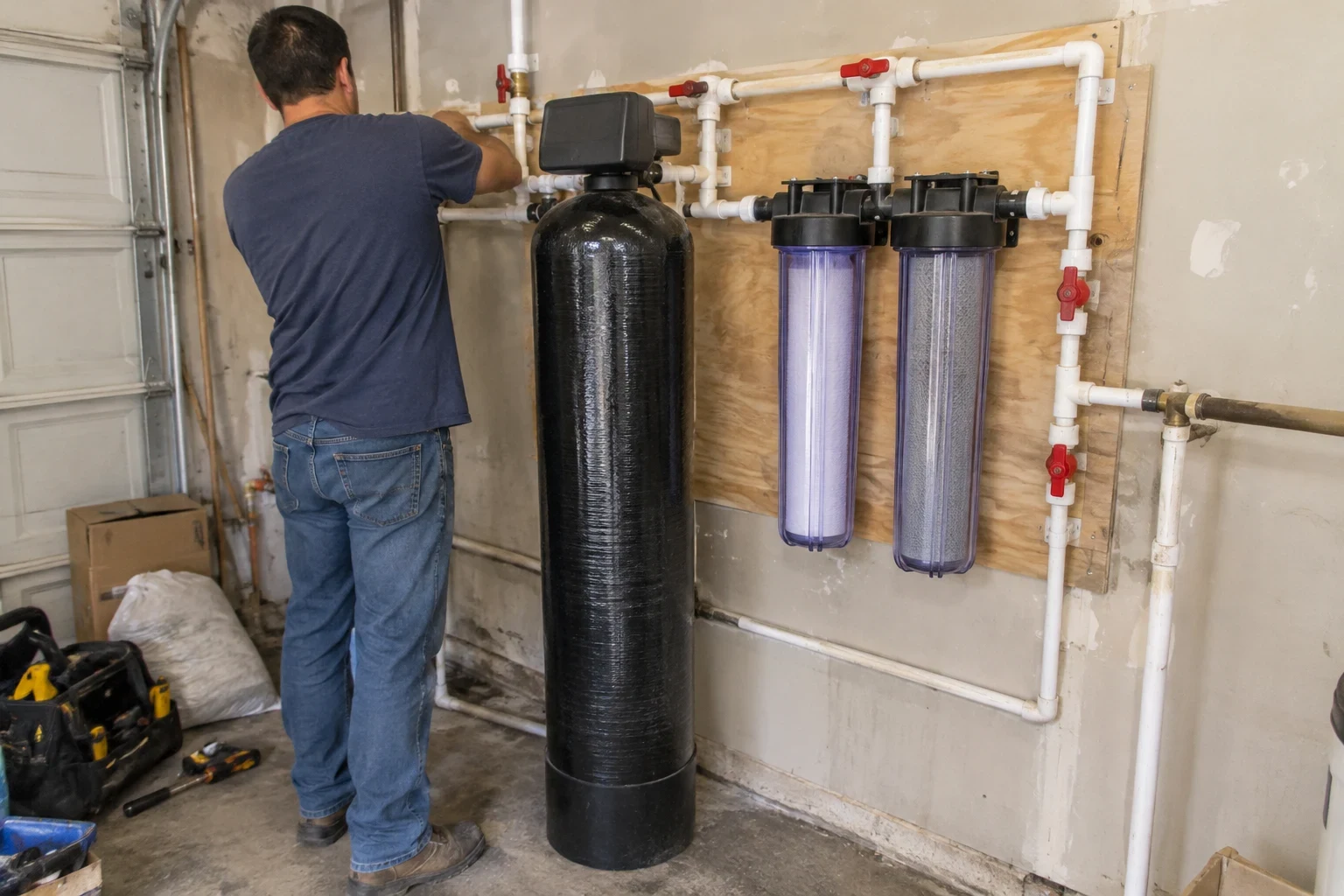
Filtered Water at Every Faucet and Shower
This kind of system is mounted on your main supply line, typically near the point where water first comes into the house. From there, water moves through a sediment stage and then a bed of carbon before it travels on to the kitchen, the bathrooms, the washer and the water heater. What most people notice first is quiet and practical: the shower stops smelling of chlorine and tap water loses its treated taste.
You can choose between two main designs. Cartridge housings are less expensive to buy, though the filters need changing more often. Tank systems packed with catalytic carbon cost more on day one, and the media can then run for several years with very little attention. We lay the two out next to each other, ownership costs included, so your decision still looks sound years after the install.
Some concerns call for a different tool. Hardness is a job for a water softener, and lead or trace contaminants in drinking water are better handled by reverse osmosis under the kitchen sink. We will point you to the right one.
What Your Installation Includes
- Sizing to your flow
- We tally bathrooms and fixtures and ask when your household uses the most water. The system is matched to that peak, so a running shower keeps its pressure even while the dishwasher and a second bathroom are drawing water.
- Sediment prefilter
- The first stage catches grit and loose scale before they reach the carbon. Holding that debris back protects the main media and lengthens its service life.
- Carbon media tank or housings
- Catalytic carbon takes on chlorine and many compounds that affect taste and smell. We explain whether a tank or cartridges suit your home, framed in years of service and the upkeep each one asks of you.
- Bypass valve and tidy pipework
- Every install gets a bypass, so water keeps flowing while the filter is serviced. We work in the pipe you already have, whether copper, PEX or CPVC, and secure the runs neatly so the finished job looks orderly.
- Irrigation left unfiltered where possible
- Lawns and shrubs gain nothing from filtered water. When the layout allows, we connect after the sprinkler branch so the media is spent only on indoor use.
Signs Whole-Home Filtration Makes Sense
Showers leave a chlorine smell
Hot water releases chlorine into the air as it sprays, so the bathroom is often where people first catch that treated smell. Carbon on the main line addresses it at every fixture, not just the kitchen tap.
You are buying a lot of bottled water
When nobody in the house will drink from the tap because of the taste, bottles turn into a steady expense. Comparing that spending with a filter's yearly upkeep often settles the question.
Grit in faucet aerators
Fine sand or particles collecting in aerators and showerheads point to sediment in the line. A prefilter stops it before it reaches your fixtures and appliances.
Pitcher filters on every counter
Countertop filters treat a small amount of water at a time and go through cartridges quickly. One system at the main line can replace several of them.
You have just moved in
New owners often inherit an old filter of unknown age, or nothing at all. We can look at what is there and tell you whether it is worth keeping.
How the Work Goes
- 1
Start with a call
Tell us what bothers you about your water and share a few details about your home. We talk through the options and set a time to visit.
- 2
Look at the water and the plumbing
We find the main line, note its material and how easy it is to reach, and look at what your water contains. If the picture is unclear, we suggest our water testing service before recommending any equipment.
- 3
A clear recommendation
You get a written comparison of the systems that fit, covering purchase cost, how often the media needs replacing and what routine care involves. The choice is yours, made with the long-term numbers in front of you.
- 4
Installation day
Installation is free. We shut off the water, fit the bypass and the system, flush the new media until it runs clear and check every joint for leaks. Floors and work areas stay covered, and we clean up before we go.
- 5
Care afterward
We walk you through switching the bypass on and off and point out the few things worth watching as the months pass. With full services after the sale, filter and media changes are ours to handle when they come due.
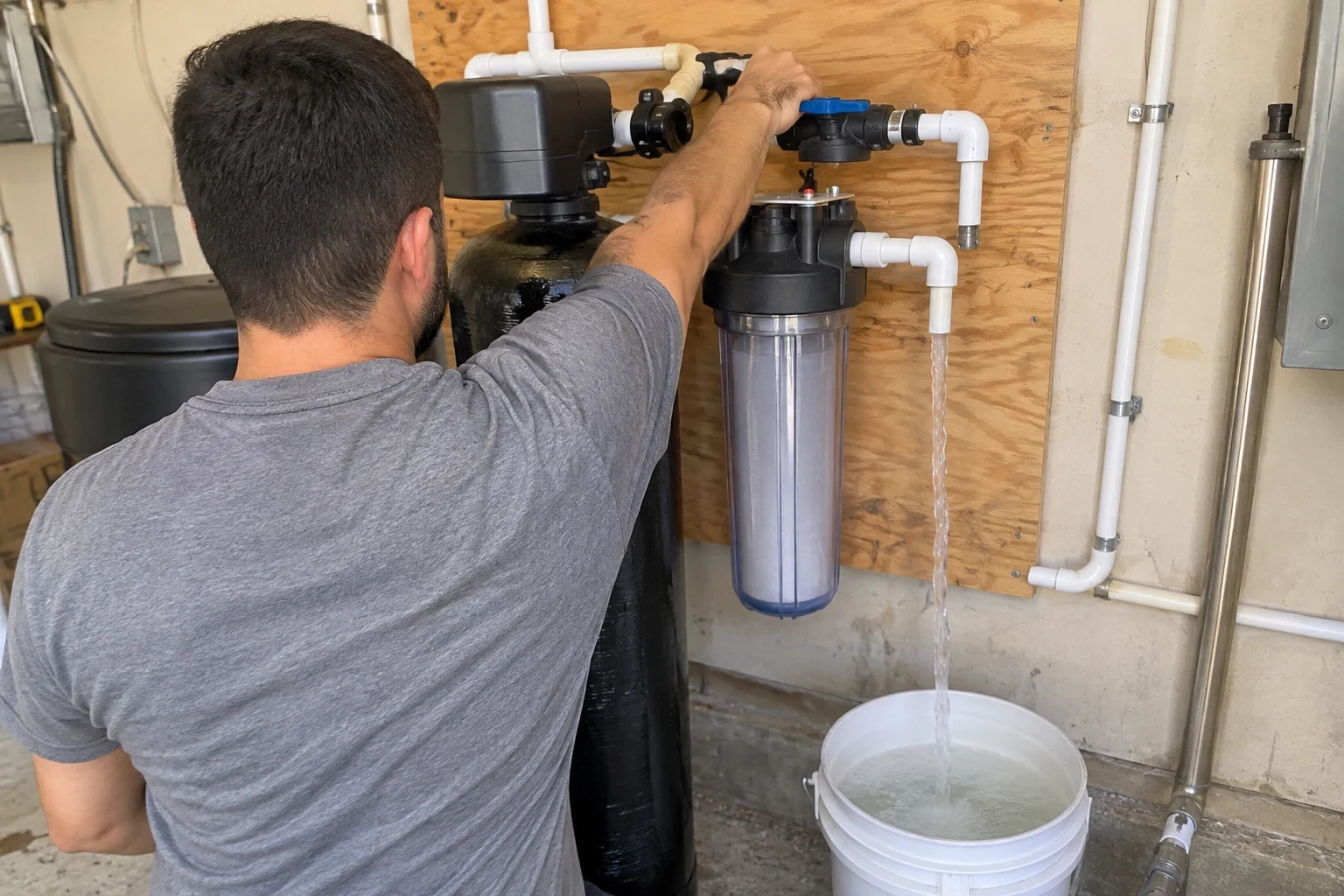
What Moves the Cost
The price of a whole-home filter is more than the box on the wall. Since installation is free, the numbers we walk through are the equipment and what it costs to keep it running. A system that costs more today can cost less across the years you own it.
- Cartridge or tank
- Cartridge housings are cheaper to buy and need replacements more often. Tank systems ask more up front and much less afterward.
- Size of your home
- More bathrooms mean a higher flow rate and a larger system to keep pressure steady.
- What is in the water
- Chlorine alone calls for a simpler setup than water with sediment, iron or odor issues. Testing keeps you from paying for stages you do not need.
- Main line location and access
- A line that is easy to reach takes less work than one tucked behind finished walls or in a tight utility area.
Common Questions About Whole-Home Filters
Something not covered here? (281) 612-5596
Will I notice a change in water pressure after the install?
You should not, as long as the system fits your home. We size it to the busiest moment of your day, so the shower keeps its strength while the washer fills. When pressure does sag after a filter goes in, the cause is usually equipment that was undersized or media left in service far too long.
How much upkeep does a whole-home system need?
That comes down to the design you choose. Cartridge housings need fresh filters several times over the years, while a carbon media tank runs much longer between changes. How much water your household uses and what that water carries set the real pace. We give you a realistic upkeep schedule for each option before you decide.
Will this take care of lead?
A standard carbon system on the main line is designed for chlorine, taste and odor, not lead. Lead usually comes from older pipes and fittings near the faucet itself, so reverse osmosis at the kitchen sink is the better tool for the water you drink and cook with. Plenty of homes pair the two.
Does a whole-home filter soften water too?
No. Filtering and softening do different jobs. If you see crusty buildup on fixtures or spots on glassware, a hardness test will show whether adding a water softener next to the filter is worth the cost.
Who do I call once the system is in?
You call us. With our full services after the sale, the same company that installed your system handles media changes, adjustments and any question about how it is performing.
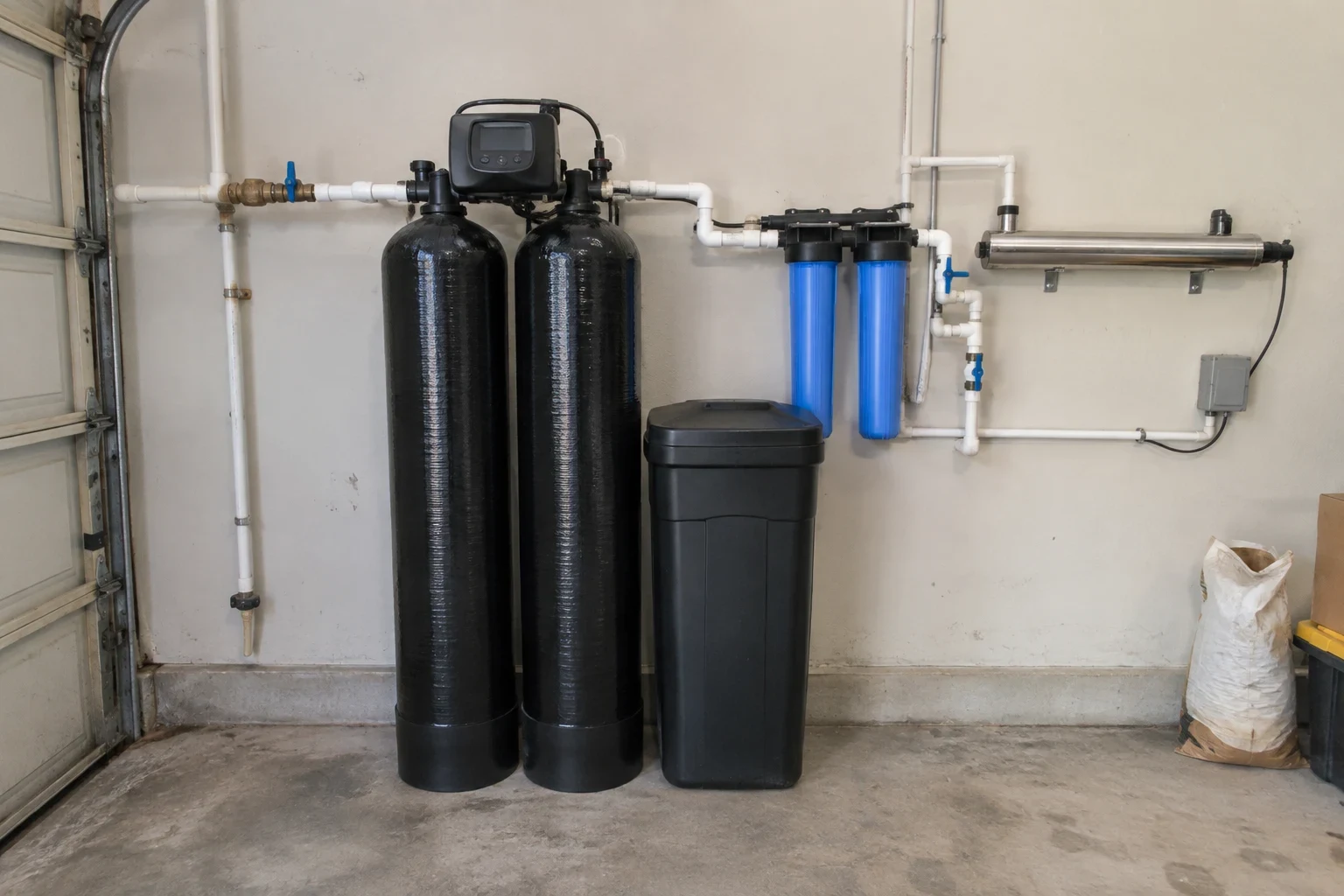
Weigh Your Options With Us
We will compare the systems that suit your home, side by side, with upkeep included. Then you choose the one that still makes sense years from now.