ServicesWater Testing
Water Testing in Stafford
Before you put money into any treatment system, it helps to know what is actually in your water. We test at your home, explain the numbers in plain terms and show you which options pay for themselves over the years and which would only add upkeep.
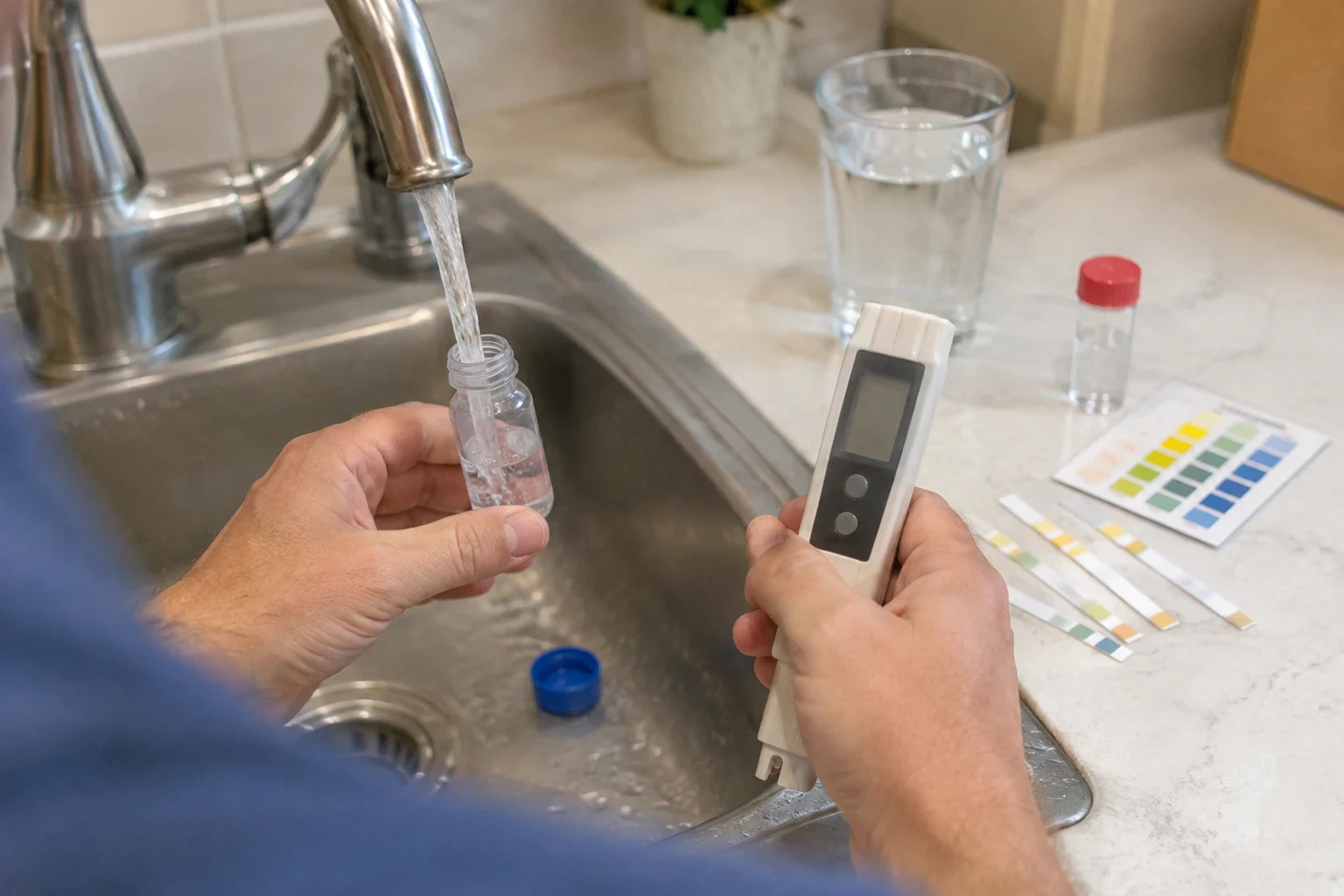
Why We Start With a Test
A water softener sized for very hard water is wasted on water that is only slightly hard. A carbon filter chosen for chlorine does little for iron. Testing first keeps you from buying equipment that solves the wrong problem, and it lets us size what you do need so the media and cartridges last as long as they should.
City water around Stafford is treated and regulated, so testing is rarely about alarm. It is about taste, scale, staining, older plumbing and making a choice you will still be glad of ten years from now. For homes on a private well, regular testing matters more, because no utility is checking that water for you.
What We Check For
Hardness
Calcium and magnesium readings show if a softener is worth considering in the first place. Often filtration alone serves a home better, and this number settles it.
Chlorine or chloramine
The disinfectant level is behind most taste and odor complaints. It also points us to the carbon media that will last longest in a whole-home system.
Iron and manganese
These two leave the orange and brown marks on fixtures and clothes. Even a trace shifts which equipment we would suggest and how often it needs attention.
pH and total dissolved solids
pH influences how water acts on copper and other pipe materials. Dissolved solids offer a fast picture of overall mineral load and tell us how much work a reverse osmosis membrane would face.
Laboratory work when it is justified
Questions like lead from older plumbing or bacteria in a well call for an outside laboratory rather than a portable kit. We will say plainly when that extra step earns its cost and when it does not.
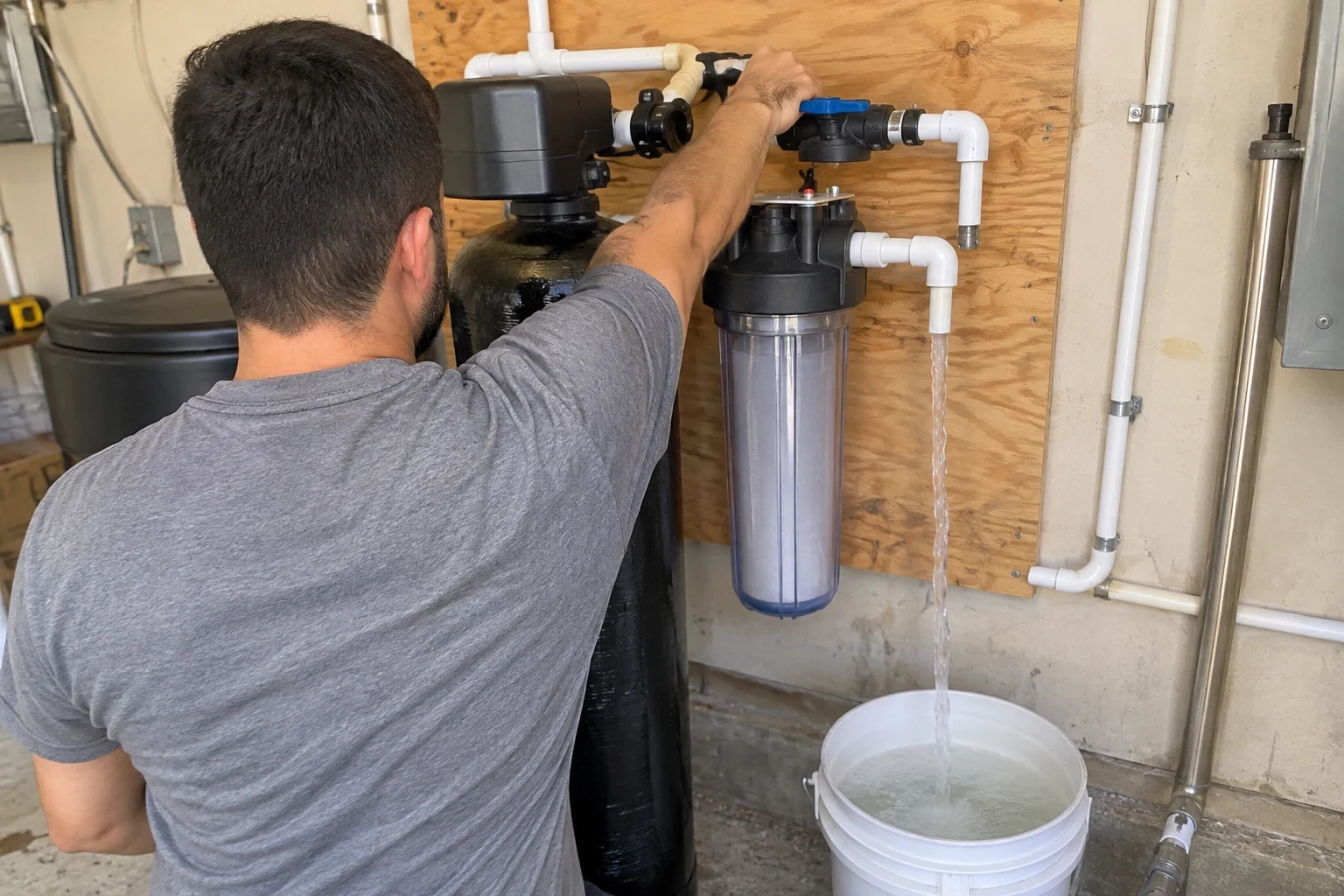
When a Water Test Makes Sense
- Tap water that smells like a pool
- If the kitchen faucet sends you to bottled water, a test measures the disinfectant level and points to what will take it out.
- Chalky buildup around the house
- White deposits on faucets, shower doors and inside the kettle come from minerals. A hardness number shows if there is enough to justify a softener.
- Orange rings and yellowed laundry
- Stains like these usually trace back to iron. A measured level means the fix is chosen on facts, not a hunch.
- Original or aging pipes
- Older plumbing and solder can add metals on the way from the street to your glass. A laboratory test settles the question.
- Water from a private well
- Well water can shift with the seasons and over the years. Checking it annually is good practice, and every well water treatment job we take on starts with a test.
- A recent move
- New-to-you plumbing and equipment of unknown age leave a lot of open questions. A first test gives you a starting point.
How a Testing Visit Works
- 1
A short phone conversation
You describe what you have noticed and tell us if your home runs on city water or a private well. That tells us which tests to bring along.
- 2
Sampling at your home
We take one sample where water enters the house and another at the kitchen faucet, which shows if anything changes inside your plumbing. We work neatly and leave each spot as we found it.
- 3
Readings during the visit
Hardness, chlorine, iron, pH and dissolved solids are measured right there, so you see the numbers as they come in. If a sample needs to go to a laboratory, we explain the reason and handle the shipping with care.
- 4
An honest recommendation
We go over your numbers and set the options next to each other: the price to buy, the expected life of each system and the upkeep it will ask of you. Now and then the best advice is to buy nothing.
What Shapes the Cost of Testing
The price of a water test follows the depth of the questions you are asking. A short panel read at your sink is quick, while outside laboratory work adds time and a separate fee. Before any sample is drawn, we explain what each option includes so nothing comes as a surprise.
- Sink-side panel or laboratory analysis
- Readings taken during the visit handle the everyday questions. Laboratory analysis is saved for items a portable kit cannot read reliably, such as lead or bacteria.
- How many items are checked
- A narrow look at hardness and chlorine is simpler than a broad panel. We set the scope by what you are actually noticing at the tap.
- City supply or private well
- Well water usually needs a wider set of checks, bacteria included, because no utility treats it before it reaches your home.
- Checking again later
- A second test after a system goes in confirms it is working as intended. That follow-up is part of the full service we provide after the sale.
Water Testing Questions
- My city water meets regulations. Why test it?
- Regulations set the legal bar for safe drinking water. They say nothing about taste, scale, staining or what your own pipes pick up along the way. A test answers those everyday questions, so any equipment you choose suits your home.
- Will you try to sell me equipment after the test?
- Our job on a testing visit is to explain what the readings mean and lay out the trade-offs of each option. Some visits end with our advice to leave your water as it is. If you later choose a system, installation is free, and our full service continues after the sale.
- How is a sink-side test different from a lab test?
- Sink-side tests give dependable readings on common items like hardness, chlorine, iron and pH during the visit. An outside laboratory uses more sensitive instruments for trace metals and bacteria. Most homes begin with the sink-side panel and add lab work only when there is a clear reason.
- How often should well water be tested?
- Once a year is a sensible rhythm, plus any time after flooding, work on the well or a change in taste, color or smell. Keeping your past results in one place makes shifts easier to notice.
- Do I need a softener?
- Only if your hardness number calls for one. Plenty of homes get better value from filtration or a reverse osmosis unit at the kitchen sink, and the test is how we tell the difference.
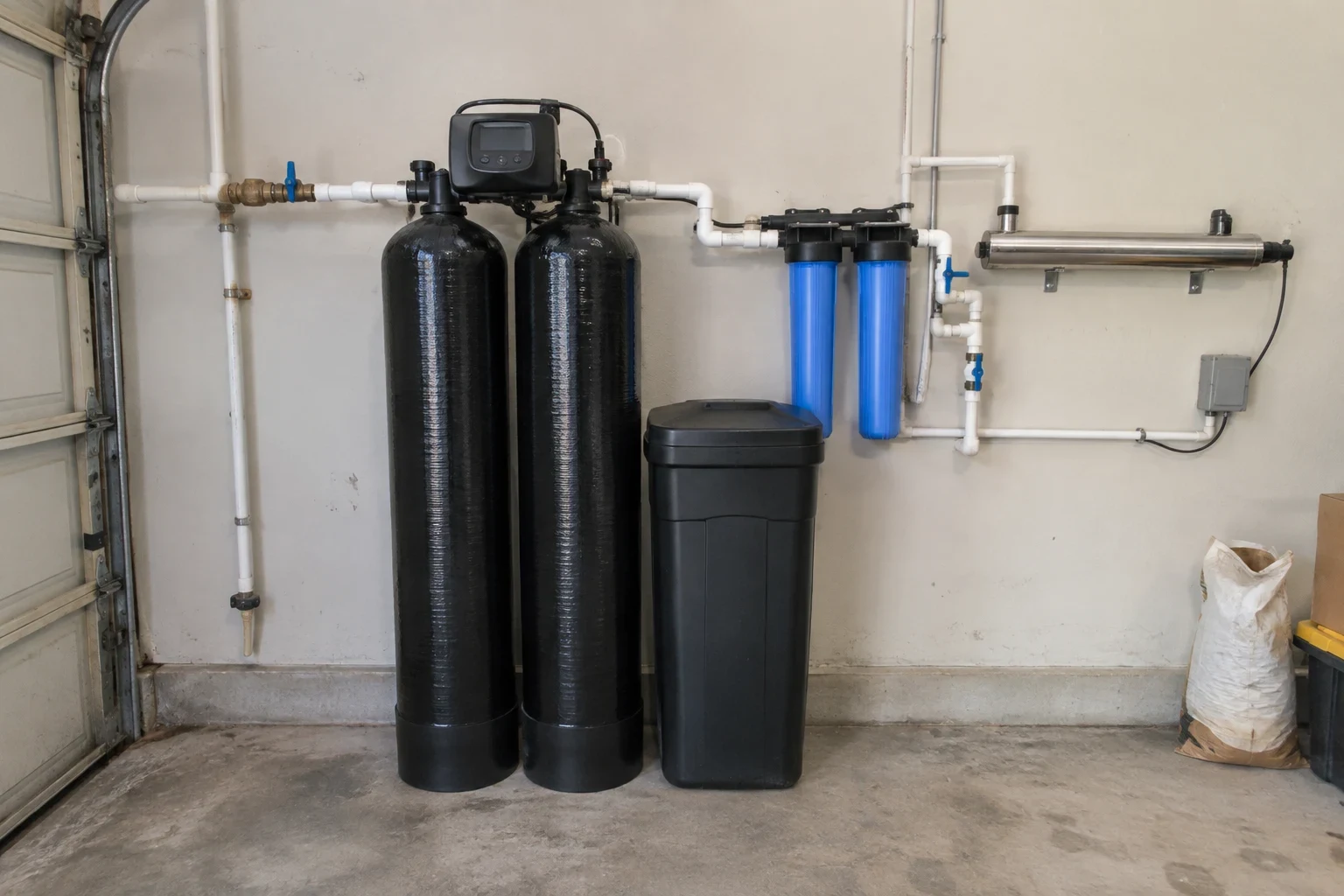
Know Your Water Before You Spend
A test takes the guesswork out of every option that follows, from whole-home filtration to a softener. We will explain the results clearly and help you weigh cost against years of use.