ServicesReverse Osmosis
Reverse Osmosis Systems in Stafford
We install under-sink reverse osmosis that gives your kitchen clean, crisp water for drinking, coffee and cooking. Before you choose, we show you what the filters and membrane cost to keep up over the years, so the system you pick still makes sense long after the first glass.
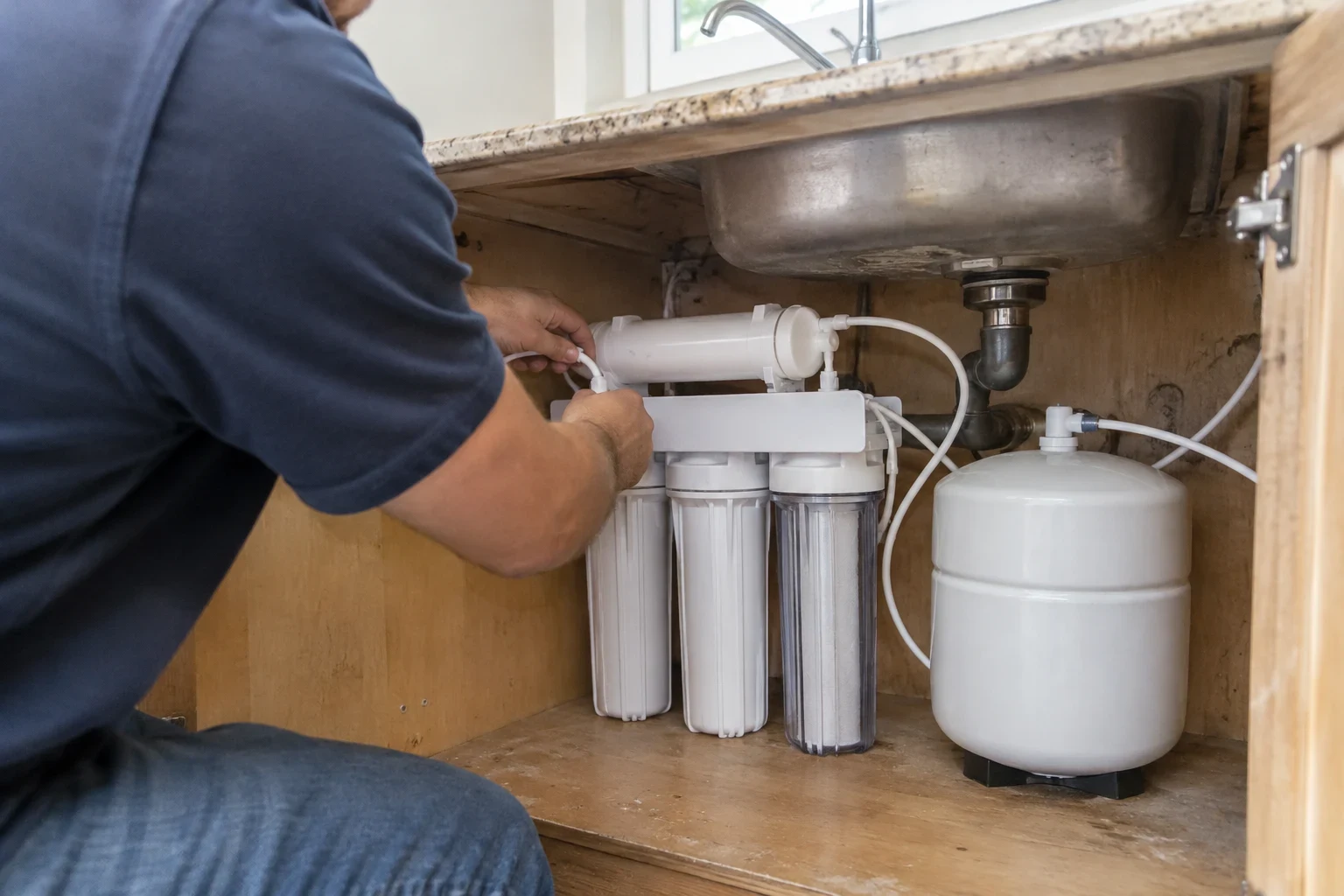
What reverse osmosis does, and when it fits
Reverse osmosis pushes your tap water under pressure across a semipermeable membrane with pores far smaller than a grain of sediment. Dissolved minerals, metals such as lead and a long list of trace contaminants stay on one side and rinse away, while clean water passes through. Carbon cartridges before and after the membrane remove chlorine taste and odor. The treated water reaches a separate faucet at your kitchen sink, and it can feed your refrigerator or ice maker as well.
RO makes the most sense when the water at your glass and your cooking pot is what concerns you: a chlorine taste that lingers, worry about lead from older faucets or solder, or a wish for one more layer of protection. When the trouble is scale on fixtures or chlorine in the shower, whole-home filtration or a water softener usually serves you better, and we will say so plainly.
Two systems can look nearly identical under the sink and cost very different amounts over their life. We weigh the purchase price against membrane life, filter prices and how much water each unit sends down the drain, so the system still makes sense in year five, not only on day one.
What comes with an RO installation
- A look at your water first
- We check total dissolved solids, chlorine and hardness at your tap. Those numbers tell us how hard the membrane will work and how often the prefilters will need changing.
- A system sized to your household
- We match daily output to how much your household actually drinks and cooks with. An oversized unit costs more to buy and maintain without giving you anything you will use.
- Careful under-sink fitting
- We plan the layout around your disposal, cleaning supplies and shutoff valves so the cabinet stays usable. Lines are cut clean, routed neatly and secured, and the drain connection is set to avoid backflow.
- A dedicated faucet in your finish
- We drill through stainless, granite or quartz with the right bit for the material, or use an existing sprayer hole when one is available. You choose a faucet finish that sits well beside your main fixture.
- Free installation
- Installation is free with your system. The figure you weigh is the equipment and the upkeep that follows.
- Full services after the sale
- We stay with the system after it goes in, from filter changes to membrane replacement and the occasional question about pressure or taste.
Signs reverse osmosis may suit your home
Bottled water is a weekly habit
Cases of water cost money, take up pantry space and mean extra trips to the store. An RO faucet covers most of that from the tap.
Coffee and tea taste off
Chlorine and dissolved minerals change the flavor of coffee and tea. Better water is often the first difference you taste.
Your faucets or plumbing are older
Lead can come from old fixtures and solder inside a house even when the supply meets standards. RO is well suited to reducing it at the tap you drink from.
Ice comes out cloudy or tastes stale
Connecting the refrigerator to the RO line gives clearer ice and better water from the door.
A test showed high dissolved solids
When water testing finds high TDS or a specific contaminant, RO is one of the most effective ways to lower it in your drinking water.
How the work goes
- 1
Start with a phone call
Share what you notice in your water and how your household drinks and cooks with it. We walk through the systems that fit and what each will cost to keep running.
- 2
Water check and cabinet review
We test at the tap and look under the sink for space, shutoffs and the drain line. If your concern reaches past drinking water, we may suggest our water testing service first.
- 3
Installation day
A typical RO fitting is finished well within an afternoon. We lay down covers inside the cabinet and over the counter, then mount the unit, drill for the faucet and connect the supply and drain lines. The new filters and membrane are flushed before the first glass is poured.
- 4
A walkthrough before we leave
We point out the shutoff, how to read the system and when each filter is due. You keep a written schedule so changes never catch you off guard, and the area is clean before we go.
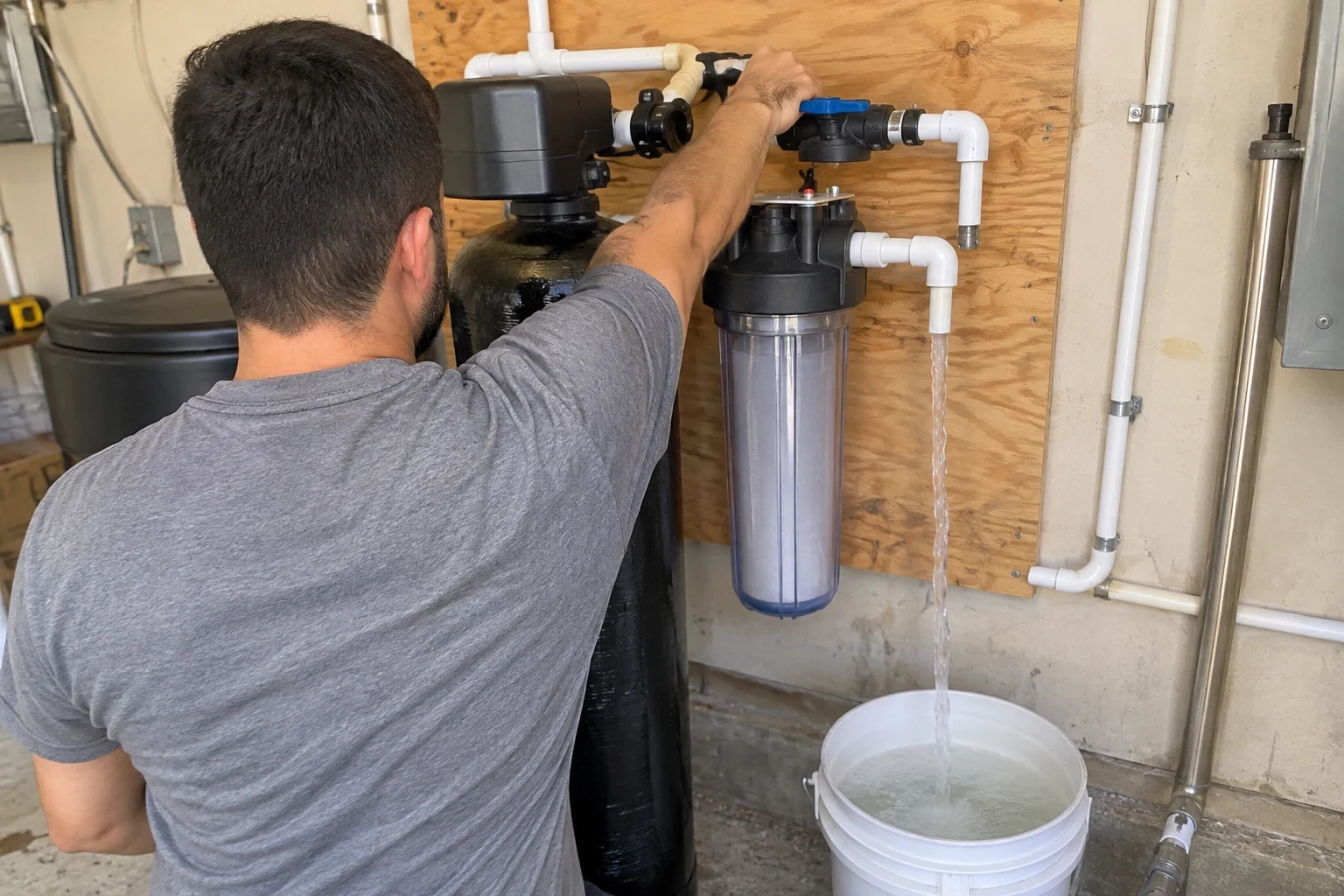
What shapes the cost of reverse osmosis
An RO system has a purchase price and an ownership cost, and we put both on the table. A bargain unit with short-lived cartridges can end up costing more than a better-built one within a few years. You see the full picture before anything goes under your sink.
- Tank or tankless design
- Tankless units take up less cabinet room and usually send less water to the drain, though they cost more at the start. Tank systems have fewer parts and are often cheaper to buy.
- Filter and membrane prices over time
- Prefilters are typically replaced every six to twelve months and membranes every two to three years, depending on your water. We work out the yearly running cost so it is a known number, not a guess.
- Mineral and taste add-ons
- Some households want calcium and magnesium returned to the water after the membrane for a rounder taste. That optional cartridge adds to the price, and if a higher pH is the real goal, our alkaline water systems may suit you better.
- Refrigerator or second connection
- A line to the fridge, ice maker or a wet bar means more tubing, fittings and time on the day.
- Your countertop and water conditions
- Granite and quartz call for slower, more careful drilling than stainless. Water heavy in chlorine or dissolved solids wears filters faster, which raises upkeep.
Reverse osmosis questions
Something not covered here? (281) 612-5596
How often do the filters need changing?
Prefilters usually last six to twelve months and the membrane two to three years. Heavy use or strong chlorine shortens that. We give you a written schedule at installation, and we handle the changes as part of our full services after the sale.
Does reverse osmosis waste water?
Every RO system rinses its membrane by sending some water to the drain. Current designs use far less than older ones, and we show you the ratio for each option before you choose. It is one of the running costs we compare side by side.
Will it fit under my sink with a garbage disposal?
Almost always. We measure the cabinet and set the unit, tank and lines where they clear the disposal and leave room for your supplies. In a cramped cabinet, a compact tankless model is often the answer.
Does RO water taste flat?
Removing minerals can give the water a lighter taste that some people notice. An optional cartridge returns a small amount of minerals, and many households like the result.
Do I need RO if my city water meets standards?
Not always. Many people choose RO for taste, for lead that can come from older fixtures inside the house, or simply for added assurance. If you are not sure, we can begin with water testing and give you a straight answer.
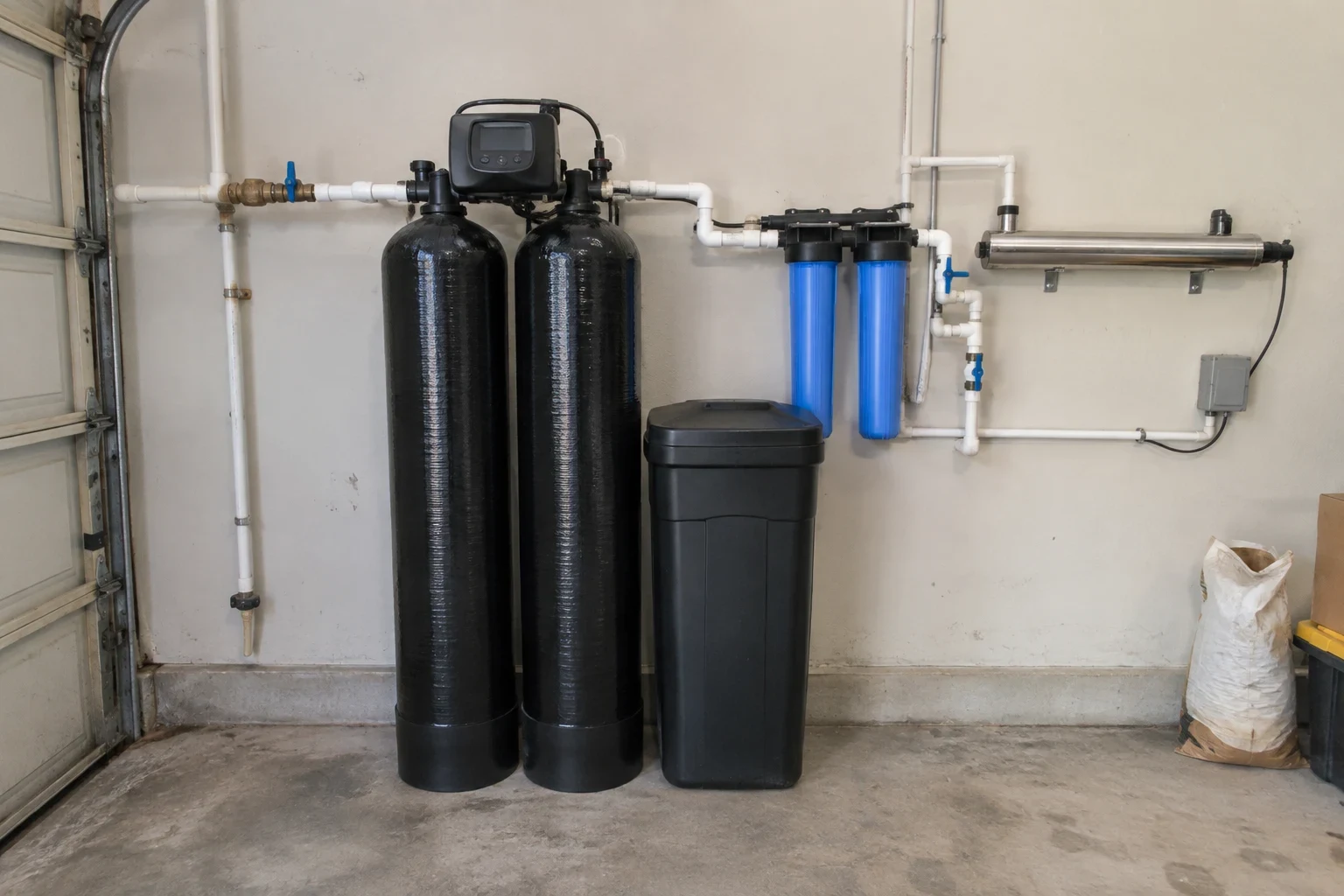
Choose a system you will be glad you kept
Tell us about your kitchen and your water, and we will compare a couple of options with their upkeep laid out. Installation is free with your system.