ServicesWater Softeners
Water Softeners in Stafford, TX
Before suggesting any equipment, we read the hardness at your tap and look at how your household uses water. A softener sized to those numbers, paired with a metered valve, goes easier on salt, keeps its resin longer and needs fewer visits across the years you own it.
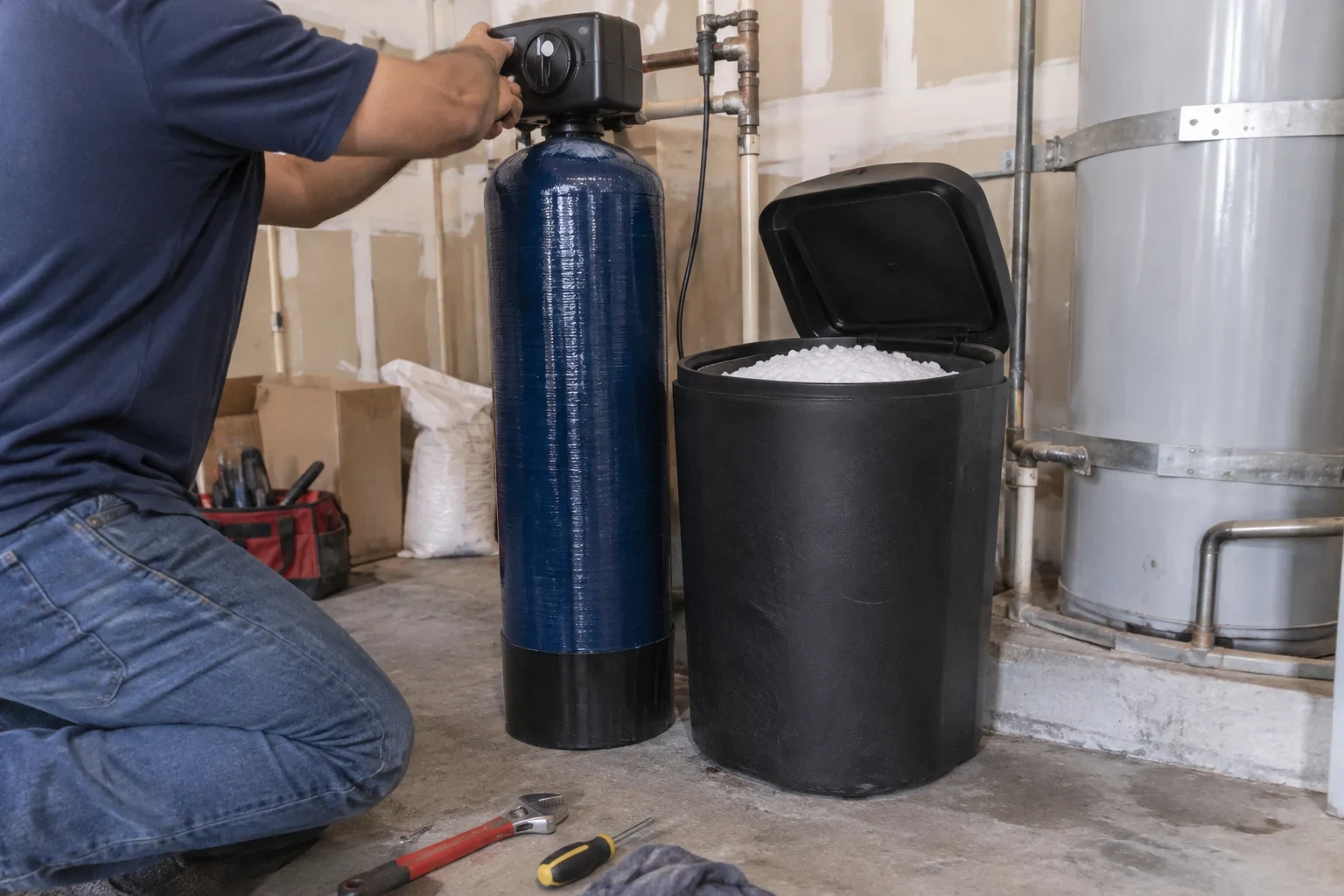
How softening works and when it pays off
A softener holds a tank packed with small resin beads. As your water passes over them, the beads capture calcium and magnesium and release sodium or potassium in their place. Those two hardness minerals are what leave chalky crust on faucets, spots on glassware and scale inside a water heater. Once the beads fill up, the unit rinses them with brine from the salt tank and starts fresh.
Hardness differs from one supply to another, so a softener should never be a guess. A reading tells us whether your home needs one and, if so, what capacity fits. Too small, and it regenerates constantly and eats salt. Too large, and you pay more on day one for resin that rarely works. Sizing it correctly is where most of the long-run savings sit.
Part of every softener we put in
- Hardness and iron reading first
- We check hardness and iron levels right at your tap. When the results don't call for a softener, you hear that from us, along with what would actually help.
- Resin sized to your household
- We work out tank capacity from three numbers: the mineral level we measured, the size of your family and the gallons you typically use in a day. Resin matched to those figures regenerates efficiently and keeps salt spending modest.
- Metered control valve
- Instead of regenerating on a fixed schedule, a demand-initiated valve waits until a measured amount of water has passed through. Quiet weeks use less salt and water, and those savings build over the life of the unit.
- Neat, careful installation
- Installation is free. We tie in at your main line or existing loop, fit a bypass valve so the softener can be taken offline, and route the drain line with a proper air gap.
- Setup and a clear handover
- We program the valve to your reading and show you how to check salt and spot a salt bridge. Full services after the sale come with it, so there is always someone to ring later.
Clues that your water may be too hard
Chalky buildup on fixtures
A white, crusty ring on aerators, shower heads and around the base of faucets is mineral scale left behind as water dries.
Cloudy glassware
Glasses that leave the dishwasher hazy, even with rinse aid in the dispenser, often point to hardness.
Poor lather
Calcium and magnesium react with soap, so you reach for extra shampoo and detergent, yet a film still clings to skin and the tub.
Noises from the water heater
Popping or rumbling in a tank heater usually means scale has collected on the bottom. That layer forces the burner to work harder and wears the heater out sooner.
Rough towels and faded clothes
When towels turn stiff and dark fabrics dull after a few washes, mineral deposits left in the weave are a common cause.
What moves the price of a softener
Brand names matter less to the price than sizing and setup do. After testing, we put a line-item quote in front of you and lay the running costs next to the purchase price. That way you can weigh each option over several years of ownership, not only on the day it goes in.
Resin capacity
Very hard water or a busy household calls for more resin. A bigger tank adds to the purchase price, yet it regenerates less often and goes easier on salt.
Metered or timer valve
A demand-based valve carries a modest premium over a timer model. In most homes it pays that back through lower salt and water use month after month.
Where the system ties in
A pre-plumbed loop keeps labor simple. Cutting into the main line, running a new drain or adding a nearby outlet takes more time and material.
Salt over the years
Sodium chloride is the economical choice. Potassium chloride runs higher per bag but some families prefer it, and we compare the two with you before you decide.
How a softener install unfolds
- 1
Testing and a conversation
We test your water, find where the main line comes into your home and review the results with you. You get our recommendation and the reasoning behind it before you commit to anything.
- 2
Matching the equipment
Resin capacity and valve type are chosen from your readings. If cleaner-tasting drinking water is also on your list, we explain how a softener works together with reverse osmosis or whole-home filtration.
- 3
Installation day
Plenty of local homes were built with a softener connection roughed in, often near the water heater or in the garage, and that keeps the work tidy. Where there isn't one, we connect to the main line and run the drain cleanly. Floors are covered while we work, and we clear everything away afterward.
- 4
Programming and verification
We set the valve, run the first regeneration and test the water coming out of the system. Only once it reads soft do we hand it over to you.
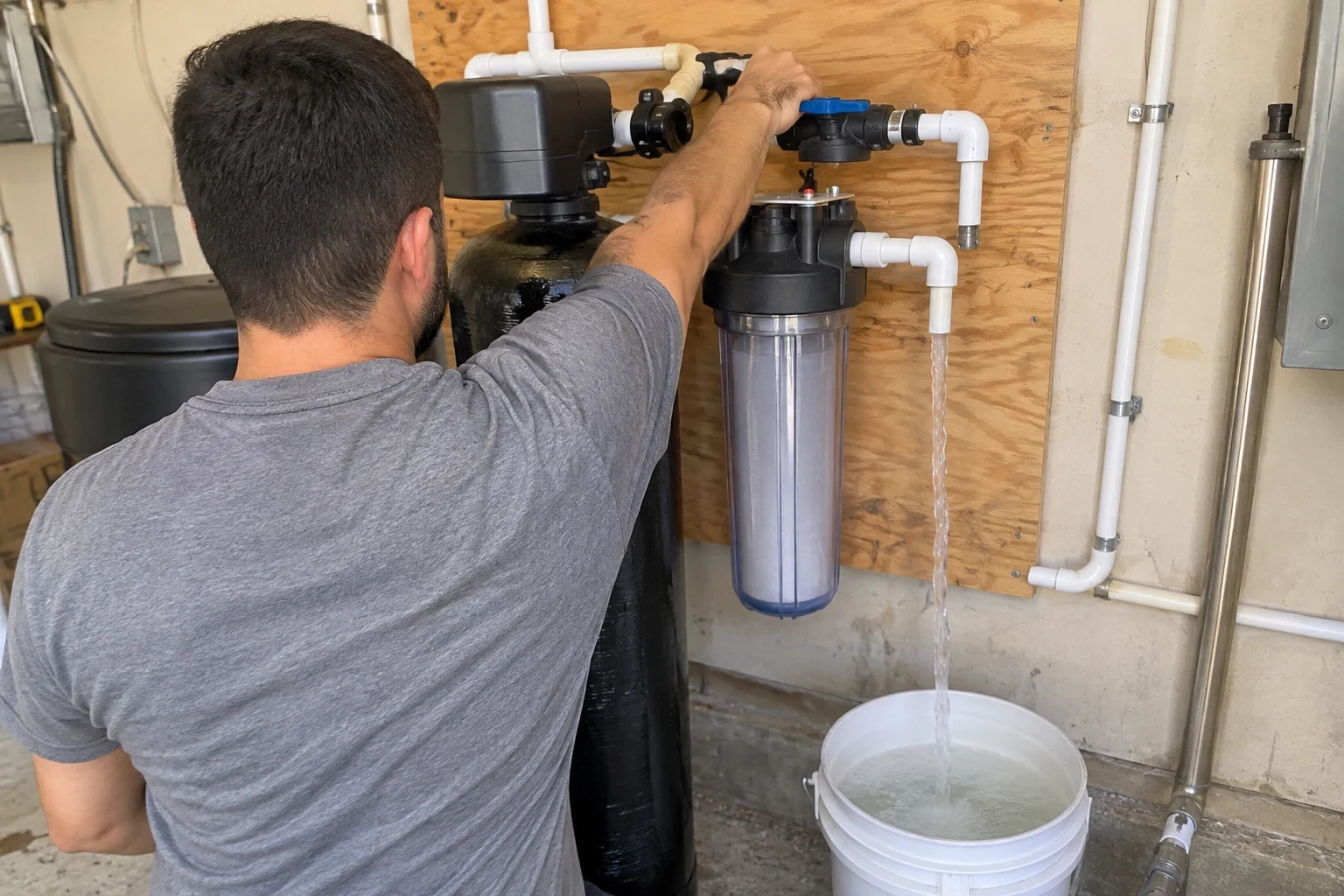
Common questions about water softeners
How can I tell whether a softener is worth it for my home?
Testing settles it. We take a hardness reading at your tap and walk you through the number. When hardness comes back low, we say plainly that a softener won't repay its cost and suggest something better suited, such as whole-home filtration for chlorine taste and odor.
Does softened water taste salty?
Very few people notice anything. How much sodium the system adds tracks with how hard the water was before treatment. If you are limiting sodium, reverse osmosis at the kitchen sink takes most of it out of the water you drink and cook with.
How often will I be refilling the salt?
Tank size, your hardness reading and how much water your home goes through all play a part. With a metered valve, many families add a bag or two every several weeks. On install day we show you where to look in the brine tank, and what to do if the salt hardens into a crust that water can't reach.
Will a softener remove chlorine or other contaminants?
It won't. Softening targets hardness minerals only, so chlorine taste and trace contaminants pass through. A carbon whole-home filter or a reverse osmosis system handles those, and either one can sit alongside your softener.
How long does softener resin hold up?
Resin breaks down gradually, and chlorine in city water does most of the damage. Placing a carbon filter upstream shields the beads and stretches their working life. Once performance fades, we can replace the resin itself and keep the rest of the system.
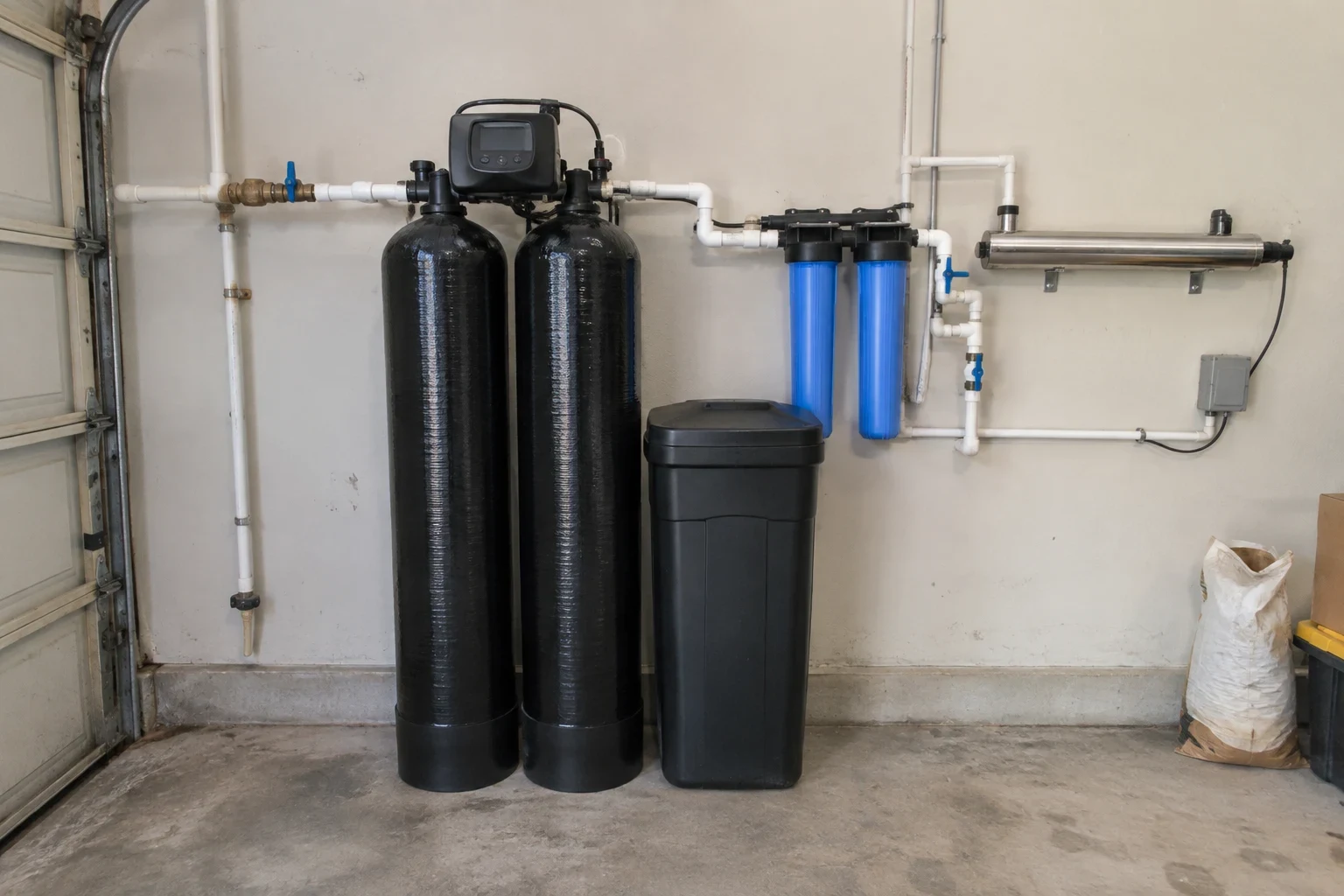
Find out what your water needs
We'll start with a hardness test and give you an honest answer about whether a softener is worth it for your home. If it is, we'll size it to last.