ServicesWell Water Treatment
Well Water Treatment in Stafford
A private well gives you water no utility treats for you. We test it first, then design a system that removes what is actually there, iron, sulfur odor, hardness or bacteria, and we explain what it will cost to run over the years, not just to buy.
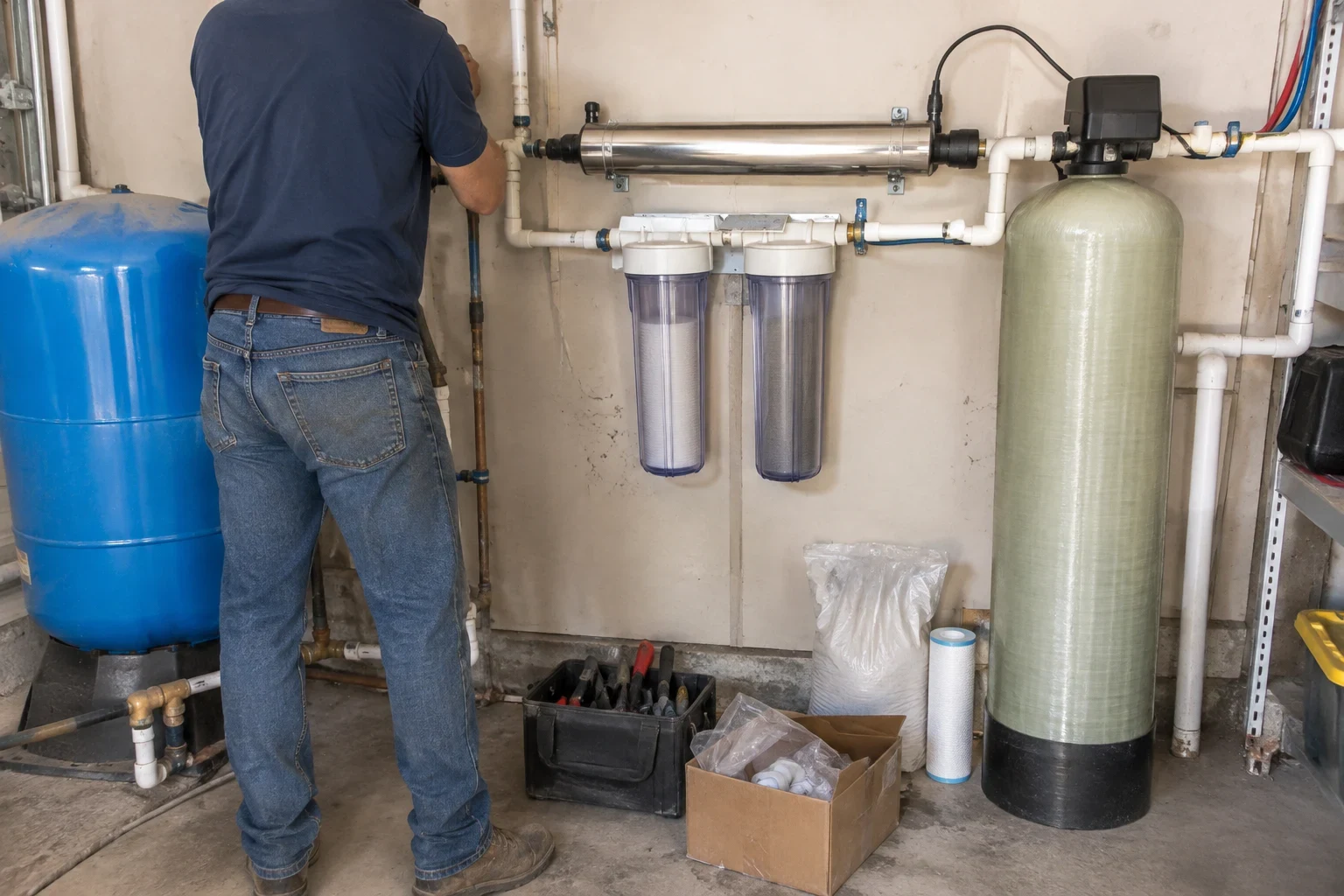
Treatment built around what your well holds
Every well is different, and two homes on the same road can pull very different water. One may carry dissolved iron that leaves orange rings in the tub. Another smells of rotten eggs from hydrogen sulfide the moment the hot water runs. Some wells test fine on minerals but show coliform bacteria after heavy rain. A single off-the-shelf filter rarely handles all of that, so we start with a test and build from the results.
We also look past the purchase price. A cheaper cartridge setup can cost more over five years than an oxidizing filter that cleans itself by backwashing. We lay out the media life, the parts you will replace and the time each option asks of you, so the system you choose still makes sense long after it goes in. Installation is free, and we offer full services after the sale.
What a well water system from us includes
- A lab test before any recommendation
- We check iron, manganese, hardness, pH, hydrogen sulfide and bacteria. The numbers decide the equipment, so nothing is added that your water does not need.
- Iron and sulfur removal
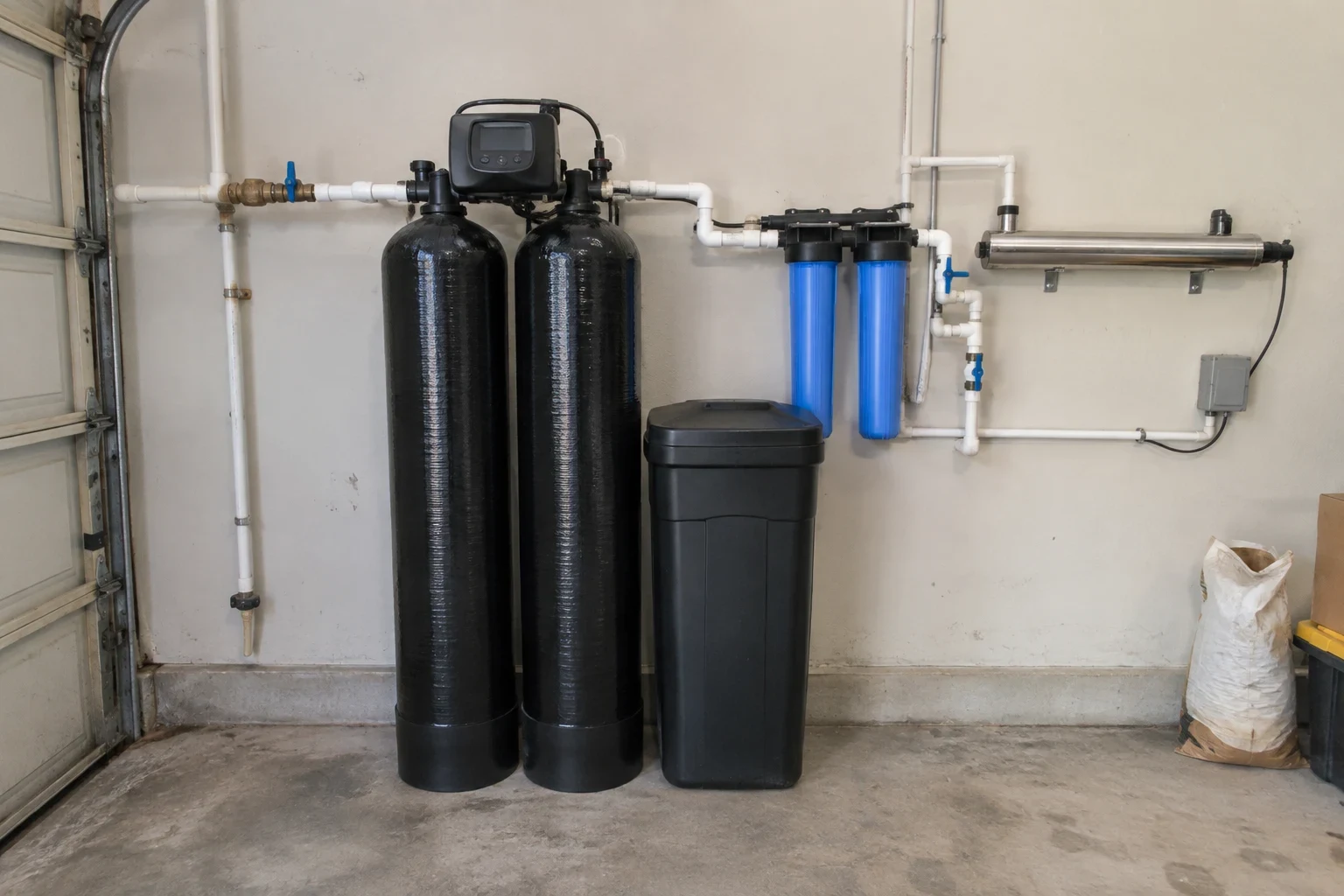
- For most iron and odor problems we use an air-injection oxidizing filter. It turns dissolved iron and sulfur into particles the media traps, then flushes them out on a timed backwash with no chemical refills.
- Sediment and hardness stages
- A sediment prefilter protects everything downstream from sand and grit. If your test shows hard water, a softener stage follows; our Water Softeners page covers that equipment in more detail.
- UV disinfection when bacteria are present
- An ultraviolet chamber treats water as it flows through, without adding anything to it. The lamp is replaced about once a year, and we show you how to tell when it is due.
- Clean, serviceable installation
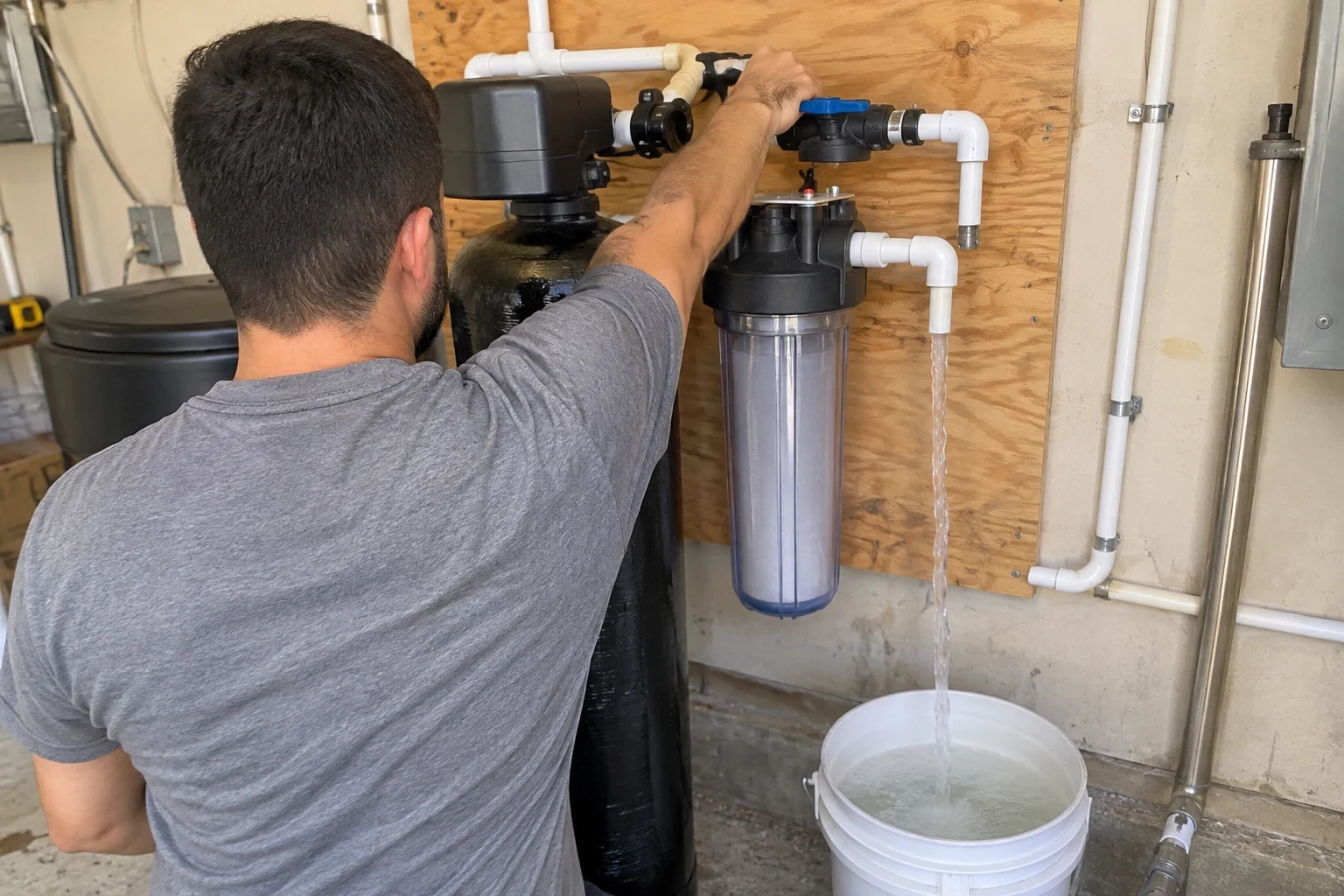
- We mount equipment where it can be reached, add bypass valves so you keep water during service, and route the backwash line to a proper drain. We protect floors and clear away packaging before we leave.
Signs your well water needs treatment
Orange or brown staining
Rust-colored marks on sinks, toilets and laundry usually point to iron. Even low levels build up in fixtures and water heaters over time.
A rotten-egg smell
Hydrogen sulfide gives well water that sulfur odor, often strongest on the hot side. It is unpleasant and it tarnishes silver and copper.
Black specks or slimy residue
Dark grit or slick deposits in toilet tanks can mean manganese or iron bacteria growing in the plumbing.
Cloudy water after rain
Water that turns murky after a storm may be drawing in surface runoff. That is the moment to test for bacteria.
Spotty dishes and white crust
Scale on faucets and glassware suggests hardness, which shortens the life of water heaters and appliances.
No test in the past year
Private wells are the owner's responsibility. A yearly check catches changes before they show up at the tap.
What shapes the cost of well water treatment
Well systems vary more in price than city water filters because the water itself varies so much. The real comparison is the purchase price plus what the system costs to run each year. We give you both before you decide.
What the test finds
A well with only sediment needs one stage. Iron, sulfur and bacteria together may need three or four.
Flow rate and household size
Equipment must keep up with your peak demand, such as two showers and a washer at once. Undersized systems lose pressure and wear out sooner.
Equipment type and upkeep
Self-cleaning media costs more at first but avoids frequent cartridge purchases. Chemical-feed systems are cheaper to buy and need regular refills.
Space and plumbing at the wellhead
Tight spaces, older pipe or a long run to a drain can add materials and time. Installation itself is free.
How a well water project runs
- 1
Phone conversation
You tell us what you see, smell or taste and how your well is set up. We explain the testing and what to expect next.
- 2
Testing and a written plan
We sample your water and review the results with you line by line. You get a written recommendation that shows equipment cost alongside yearly upkeep, so you can compare options fairly.
- 3
Installation day
Most systems go in within a day near the pressure tank or in the garage. We shut off the water only as long as needed, connect the bypass and drain, and set the backwash schedule.
- 4
Startup and walkthrough
We flush the system, check pressure and show you the controls. You learn which parts need attention and roughly when.
- 5
Care after the sale
We stay available for media changes, UV lamp swaps and retesting, so the system keeps performing the way it did on day one.
Well water treatment questions
Can you skip the lab test and just install a filter for my well?
We would rather not, and we suggest a test on every well we treat. Dissolved iron, hydrogen sulfide and bacteria each call for different equipment, so guessing can leave you paying for a system aimed at the wrong problem. The results also show how strong each issue is, which sets the size of what goes in. Our Water Testing page lists what we check.
Is my water pressure going to drop once treatment is in place?
Equipment sized for your home should not leave you with a drop you can feel at the faucet. We match it to your well pump and to your heaviest use, such as a shower running while the washer fills. We measure the pressure before we leave.
What kind of upkeep should I expect from a well system?
It depends on the equipment you pick. An oxidizing filter backwashes itself on a timer and only needs new media every several years. A UV lamp is replaced about once a year, and a softener needs its salt topped up.
My water smells of sulfur and stains the tub. Will one unit handle both?
Often, yes. An air-injection oxidizing filter typically takes out iron and the rotten-egg odor together, provided your test numbers sit inside the range it is designed for. When levels are higher than that, we explain what an extra stage would add and why.
Does it make sense to put reverse osmosis under the kitchen sink too?
Some well owners add it, especially when a test shows nitrates or they want one more step for drinking and cooking water. An under-sink unit pairs well with whole-home treatment upstream. Our Reverse Osmosis page covers how the two work together.
Start with a clear picture of your well
Describe the stains, smells or taste you are noticing, and we will walk you through testing, the options that fit and the running cost of each over the years. Get your quote by phone.