Can You Put a Filter on a Well Water System in Stafford?
A well filter works best when it is chosen from a lab result and sized for the upkeep you are willing to keep up with for years.
Can you put a filter on a well water system?
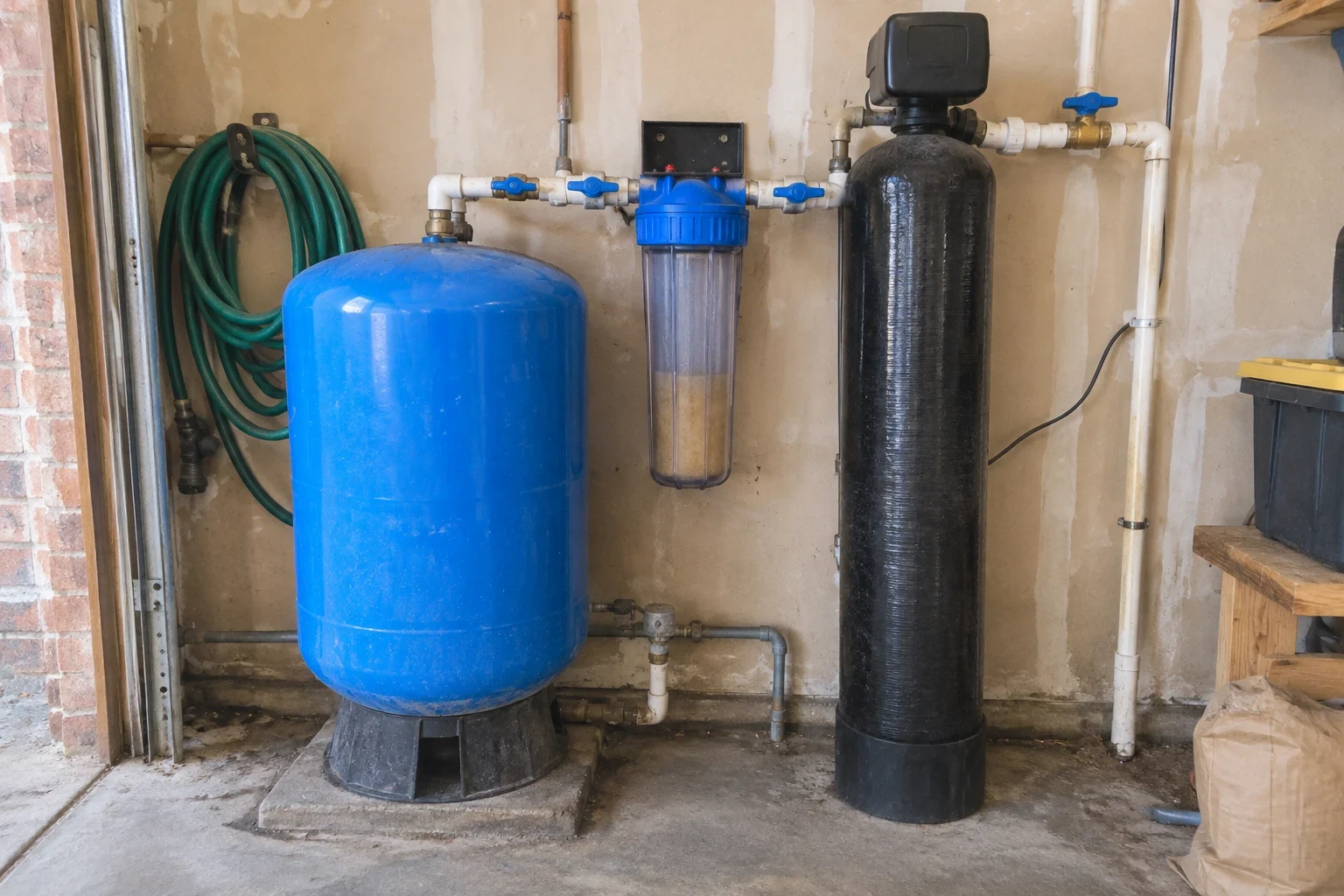
Yes. A filter can be added to almost any private well system, usually on the main line just after the pressure tank, so every tap in your home gets treated water. The right filter depends on what a lab test finds, such as sediment, iron, sulfur odor or bacteria, and on how much upkeep you want long term.
Does a well pump already have a filter?
Not one that protects your drinking water. Most submersible pumps sit behind a screen at the bottom of the well casing, and some have an intake screen of their own. Those screens keep sand and gravel out of the pump. They do nothing for dissolved iron, odor or bacteria.
That is why treatment goes inside, after the pressure tank. Water arrives there at steady pressure, the equipment is easy to reach, and a bypass valve lets you shut the filter off for service without losing water to the rest of your home. We plan the layout so cartridges and media tanks can be reached without moving anything else in the garage or utility space.
Do you need a filter for well water, and what usually goes wrong?
A private well is not treated or monitored by a city utility, so its water quality is the owner's job. Many wells produce water that is perfectly fine to drink. Others have problems you can see or smell, and some have problems you cannot, which is why testing comes before any purchase.
Around the Houston area, heavy storms and flooding can push surface water toward a wellhead, so a well that tested clean before a big rain event deserves a fresh look afterward. These are the issues we see most often on private wells:
- Sediment and sand that clog aerators, wear out valves and cloud the water
- Iron and manganese, which leave orange or black stains on fixtures and laundry
- Hydrogen sulfide, the rotten-egg smell that is often strongest on hot water
- Hardness that builds scale in water heaters and on glass shower doors
- Bacteria, which has no taste or smell and only shows up on a lab test
Which filter fits which problem, and what it costs to keep
The cheapest system to install is not always the cheapest to own. A simple cartridge sediment filter costs little up front but needs regular cartridge changes, and a heavy sediment load can mean changing them often. A backwashing media tank costs more on day one, cleans itself on a timer and usually goes years between media changes. Over the life of the system, that difference in upkeep often matters more than the purchase price.
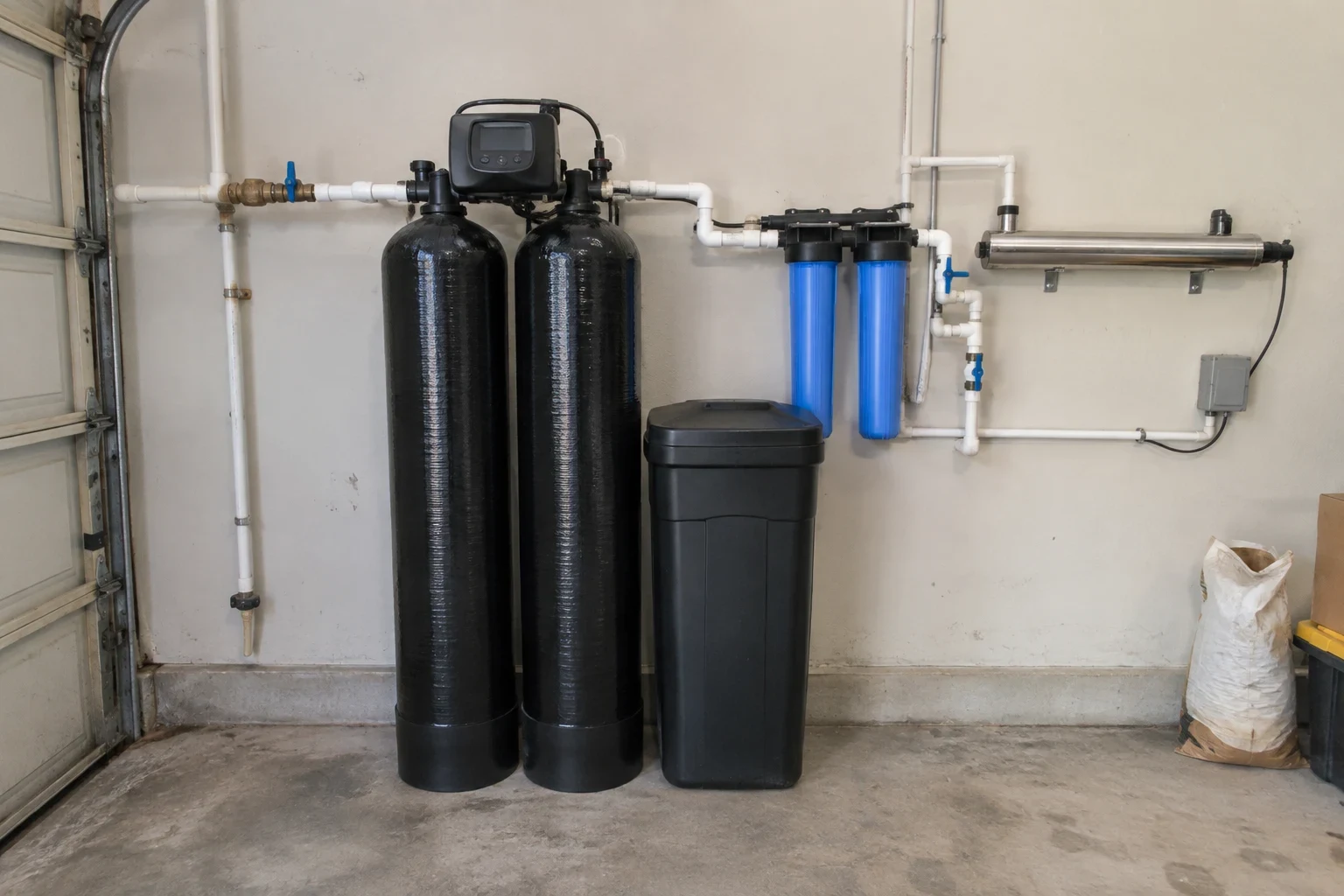
We look at both numbers with you. If the test shows only light sediment, a cartridge housing may be the sensible answer. If it shows iron and sulfur together, a single cartridge will foul quickly and a dedicated iron and sulfur filter will hold up better. Many homes end up with a short train of equipment, each piece doing one job well, followed by reverse osmosis at the kitchen sink for drinking and cooking water.
Free installation is part of every system we put in, and we offer full services after the sale, so replacement media, cartridge changes and checkups come from the same people who set the system up.
- Sediment filter: first in line, protects everything after it
- Iron and sulfur filter: removes staining and odor, usually backwashing
- Water softener: only if the hardness test supports it
- UV disinfection: treats bacteria without adding chemicals
- Reverse osmosis: a separate system for drinking water at one tap
How often should well water be tested?
A lab test once a year is a sound habit for most private wells, with bacteria and nitrates as the minimum. Test sooner after flooding near the wellhead, after any pump or plumbing repair, or any time the water changes in color, taste or smell.
Once a treatment system is installed, a follow-up test confirms it is doing its job. That result also gives you a baseline. If something drifts years later, you will know whether the well changed or the filter media is simply due for service. Our water testing service covers both the first look and those later checks.
More questions about filtering a well
Something not covered here? (281) 612-5596
How do you change a whole-house filter without a housing wrench?
Close the shutoff valves, press the pressure-release button, then grip the housing firmly with both hands and turn it counterclockwise; a rubber jar-opener pad helps. If it will not budge, stop before you crack the housing and use the proper wrench, since a damaged sump can leak under full pressure.
Can you purify well water naturally?
Boiling kills bacteria for a pot of water, but it does not remove iron, sulfur, nitrates or sediment. For water at every tap, physical filtration and UV light are the closest thing to a chemical-free approach, and they still need a test to confirm they are the right fit.
How much water is actually in a well?
It depends on the casing diameter and how far the water sits below the top. A six-inch casing holds roughly one and a half gallons per foot of standing water, and the pressure tank adds a small reserve on top of that.
How long does a water well last?
A well that was built well and kept up can serve a home for decades, though pumps and pressure tanks wear out well before the well itself. Keeping sediment out of your plumbing and catching problems with annual testing helps every part of the system last longer.
Talk through your well before you buy anything
Tell us what you are seeing at the tap and what your last test showed. We will explain which equipment fits, what it takes to maintain each option over the years, and where testing should come first.